
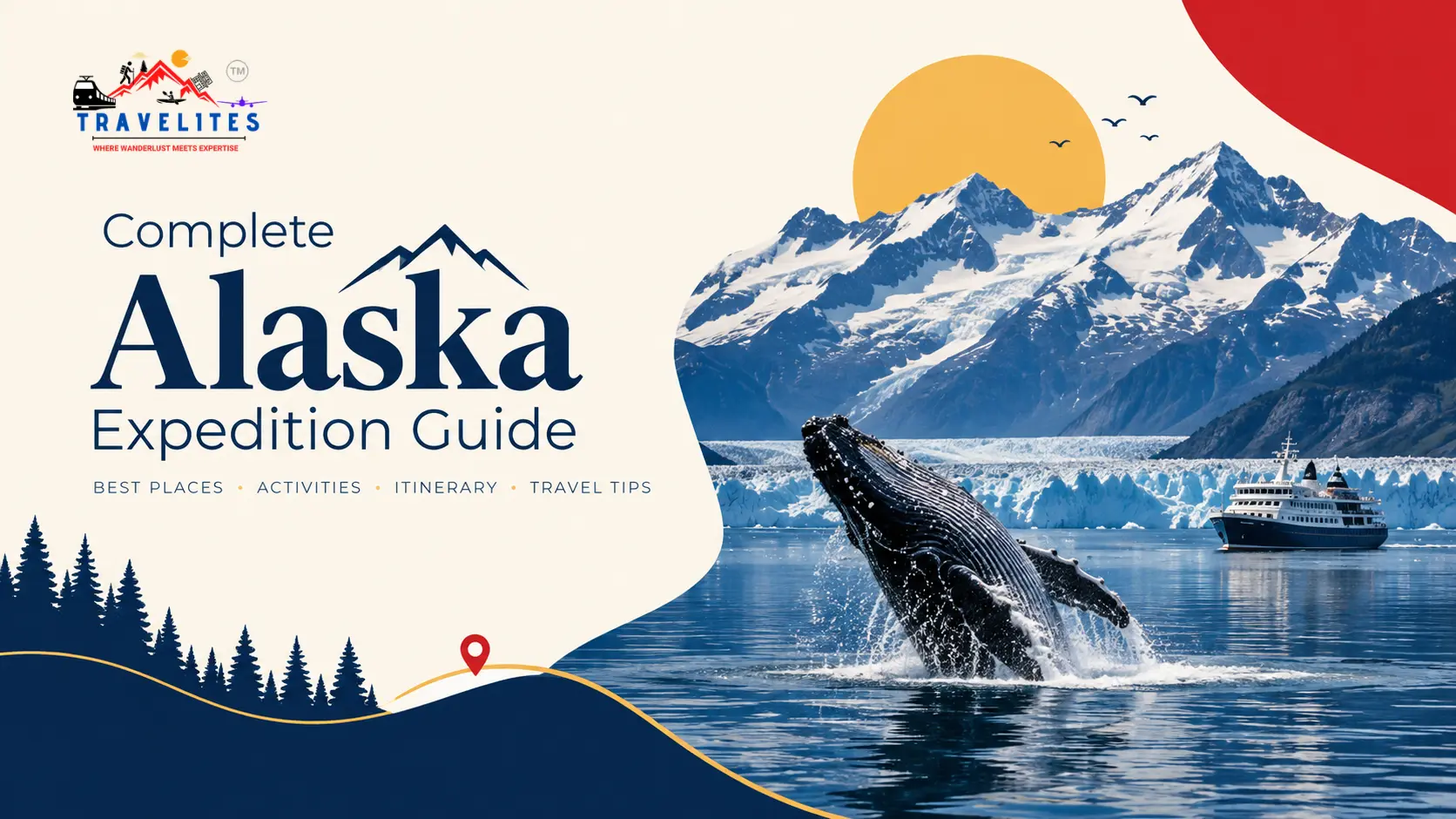
Short Overview: Alaska is a spectacular destination for adventure travel, offering towering glaciers, snow-covered mountains, extraordinary wildlife, and vast wilderness. This complete Alaska expedition guide covers the best places to visit, ideal travel seasons, adventure activities, accommodation, transportation, and essential planning tips for an unforgettable journey.
Whether you are considering an Alaska expedition tour, a wildlife adventure, or a scenic cruise, understanding the destination will help you plan a memorable experience in America’s largest state.
Why Choose Alaska for Your Next Expedition?
Alaska is one of the world’s most extraordinary destinations for adventure travel. Its dramatic landscapes, remote wilderness, and rich biodiversity make it an ideal choice for travellers seeking experiences beyond conventional sightseeing.
- Glacier landscapes: Witness massive glaciers, ice formations, and breathtaking fjords.
- Wildlife encounters: Observe bears, moose, caribou, whales, and bald eagles in their natural habitats.
- Northern Lights: Experience the magical Aurora Borealis during the darker months.
- Adventure activities: Enjoy hiking, kayaking, glacier exploration, and backcountry camping.
- Scenic journeys: Discover spectacular landscapes by train, road, boat, or aircraft.
- Cultural experiences: Learn about Alaska Native heritage and local traditions.
- Remote wilderness: Explore vast natural environments far removed from urban life.
From comfortable expedition cruises to challenging wilderness treks, Alaska adventure tours offer experiences for different interests, budgets, and activity levels.
Best Time to Visit Alaska for an Expedition
The best time to visit Alaska depends on your preferred activities, weather conditions, and travel objectives. Summer is generally the most convenient season for sightseeing, wildlife encounters, and outdoor adventures, while winter offers opportunities for Northern Lights viewing and snow-based activities.
Alaska Travel Seasons at a Glance
| Season | Months | Weather and Conditions | Best Experiences |
| Spring | April–May | Snowmelt and changing landscapes | Scenic photography and quieter travel |
| Summer | June–August | Relatively mild weather and long daylight hours | Wildlife watching, hiking, cruises, and glacier tours |
| Autumn | September–October | Cooler temperatures and colourful foliage | Fall photography and early Aurora viewing |
| Winter | November–March | Cold temperatures and snowy landscapes | Northern Lights, dog sledding, and winter adventures |
Summer in Alaska: June to August
Summer is a popular season for Alaska expedition packages because of its relatively mild weather, extended daylight, and accessibility to outdoor attractions.
- Glacier and fjord cruises
- Wildlife photography
- Hiking and trekking
- Sea kayaking
- National park exploration
- Scenic railway journeys
June through August is also a favourable period for spotting whales, bears, and migratory birds, although wildlife sightings are never guaranteed.
Autumn in Alaska: September to October
Autumn transforms Alaska into a landscape of golden tundra, red foliage, and snow-dusted mountain peaks. It is an appealing season for photographers and travellers seeking quieter surroundings. As nights grow longer, opportunities to witness the Northern Lights improve.
Winter in Alaska: November to March
Winter offers a completely different Alaska experience. Snow-covered forests, frozen lakes, and dark skies create ideal conditions for winter adventures.
- Northern Lights excursions
- Dog sledding
- Snowshoeing
- Cross-country skiing
- Winter photography
- Snowmobile adventures in permitted areas
Winter travel requires specialist clothing, careful planning, and consideration of reduced daylight and limited transport services.
Travel Tip: For a first-time Alaska expedition combining sightseeing, wildlife, and outdoor activities, consider June through August. For Aurora Borealis experiences, consider late August through March, depending on location and weather conditions.
Top Places to Visit in Alaska
Alaska is vast, and each region offers a different combination of landscapes, wildlife, and adventure opportunities. Selecting destinations according to your interests can help create a more rewarding Alaska travel itinerary.
Denali National Park and Preserve
Denali National Park and Preserve is one of Alaska’s most celebrated wilderness destinations, known for its immense mountain landscapes, wildlife, and backcountry experiences. The park is home to Mount Denali, North America’s highest peak, which rises to 20,310 feet.
Things to do in Denali National Park:
- Explore the Denali Park Road by bus
- Enjoy wildlife watching
- Join ranger-led programmes
- Experience scenic photography
- Discover hiking trails
- Plan guided backcountry adventures
Most sightseeing beyond the park entrance relies on bus transportation during the main summer season. Visitors should check road access and operating conditions before travelling.
Kenai Fjords National Park
Kenai Fjords National Park is famous for its dramatic coastal scenery, tidewater glaciers, and marine wildlife. It is an excellent destination for travellers interested in glacier exploration and ocean-based adventures.
Highlights:
- Boat tours through glacier-filled waters
- Whale and sea otter watching
- Coastal hiking
- Glacier photography
- Scenic views of rugged mountain ranges
Glacier Bay National Park
Glacier Bay National Park and Preserve is a spectacular destination for witnessing the scale and beauty of Alaska’s glacial landscapes. Its deep fjords, ice formations, and surrounding mountains create an unforgettable setting for expedition cruising. Visitors may encounter humpback whales, sea lions, harbour seals, and a variety of seabirds.
Wrangell-St. Elias National Park
Wrangell–St. Elias National Park and Preserve is the largest national park in the United States, offering extraordinary opportunities for remote wilderness exploration.
Highlights:
- Guided glacier hikes
- Mountain photography
- Backcountry trekking
- Historic mining town visits
- Scenic flights
- Wilderness camping
This destination is particularly suitable for adventurous travellers who want to experience Alaska away from conventional tourist routes.
Fairbanks
Fairbanks is one of the most recognised destinations for Northern Lights tourism. Its inland location and access to winter activities make it a popular base for Aurora Borealis excursions.
Highlights:
- Northern Lights viewing tours
- Dog sledding
- Hot spring experiences
- Winter photography
- Cultural attractions
- Scenic excursions into the surrounding wilderness
Inside Passage
The Inside Passage is a network of sheltered waterways, islands, fjords, and coastal communities in southeastern Alaska. It is particularly popular for expedition cruises that combine scenic navigation with opportunities to explore local culture and wildlife. Popular stops include Juneau, Ketchikan, and Sitka.
Top Alaska Destinations Compared
| Destination | Famous For | Recommended Activities | Ideal For |
| Denali National Park | Mountain wilderness and wildlife | Hiking, wildlife tours, scenic bus rides | Nature lovers |
| Kenai Fjords | Glaciers and marine life | Boat cruises, kayaking, coastal hikes | Adventure seekers |
| Glacier Bay | Tidewater glaciers and fjords | Expedition cruises, wildlife watching | Cruise travellers |
| Wrangell–St. Elias | Remote wilderness and mountains | Glacier trekking, camping, scenic flights | Experienced explorers |
| Fairbanks | Northern Lights | Aurora tours, dog sledding | Winter travellers |
| Inside Passage | Coastal scenery and islands | Cruises, cultural visits, kayaking | Scenic travellers |
Best Things to Do on an Alaska Expedition
An Alaska expedition is not limited to sightseeing. Its diverse landscapes offer activities for adventure seekers, wildlife enthusiasts, photographers, and nature lovers.
| Activity | What to Expect | Best Season |
| Glacier exploration | Guided walks, glacier viewpoints, and ice formations | Summer |
| Wildlife watching | Bears, moose, whales, and eagles | Spring and summer, depending on species |
| Sea kayaking | Paddling through sheltered bays and coastal waters | Summer |
| Backcountry hiking | Mountain trails, valleys, and wilderness routes | Summer |
| Northern Lights photography | Capturing the Aurora Borealis | Late August–March |
| Dog sledding | Traditional sled journeys through snowy landscapes | Winter |
| Expedition cruising | Exploring fjords, glaciers, and remote coastlines | Primarily late spring–early autumn |
Glacier Exploration
Walk near accessible glaciers with experienced guides or observe massive ice formations from boats and designated viewpoints. Some guided expeditions also offer opportunities for glacier trekking, depending on conditions and participant experience.
Wildlife Watching
Alaska is home to an extraordinary range of wildlife. Guided tours provide opportunities to observe animals in their natural habitats while maintaining appropriate distances. Commonly encountered species include brown and black bears, moose, caribou, bald eagles, humpback whales, orcas, sea otters, and harbour seals.
Sea Kayaking
Paddle through sheltered bays, coastal passages, and iceberg lagoons under the supervision of trained guides. Sea kayaking is a memorable way to experience Alaska’s marine landscapes at a slower pace.
Backcountry Hiking
Explore remote valleys, mountain trails, and wilderness areas. Guided hiking expeditions are particularly valuable in locations where terrain, weather, and navigation require specialist knowledge.
Northern Lights Photography
Capture the Aurora Borealis illuminating Alaska’s night skies. A tripod, manual camera settings, and patience are essential for successful photography.
Dog Sledding
Experience a traditional northern mode of transportation through snow-covered landscapes. Dog sledding is a popular winter activity in several Alaskan destinations.
Expedition Cruising
Small expedition vessels provide access to coastal landscapes, remote shorelines, and wildlife-rich waters. Depending on the itinerary, activities may include guided shore landings, kayaking, and educational sessions.
How to Reach Alaska
Alaska is accessible through international and domestic flights, rail services, road networks, and cruise routes.
| Mode of Transport | Main Gateway or Route | Best Suited For |
| International flights | Anchorage and Fairbanks | International travellers |
| Domestic flights | Anchorage, Fairbanks, Juneau, and regional airports | Reaching remote destinations |
| Alaska Railroad | Anchorage, Denali, Fairbanks, and other stations | Scenic inland journeys |
| Road travel | Major highways and accessible towns | Independent exploration |
| Cruise ships | Coastal ports and the Inside Passage | Glacier and coastal experiences |
By Air
The main international gateways are Ted Stevens Anchorage International Airport (ANC) and Fairbanks International Airport (FAI). Travellers from India generally need connecting flights, often through major international hubs in North America or other suitable transit destinations. The exact route depends on airline schedules, visa requirements, and the chosen expedition.
By Train
The Alaska Railroad connects major destinations, including Anchorage, Fairbanks, and Denali. Its scenic routes offer an alternative to driving and allow travellers to experience Alaska’s landscapes from the comfort of a railway carriage.
By Road
Road travel is suitable for exploring accessible regions and connecting major towns. However, Alaska’s vast geography means that driving distances can be significant. Some remote destinations require flights, boats, or guided transfers.
By Cruise
Expedition cruises offer a convenient way to explore Alaska’s coastal regions, especially the Inside Passage and glacier-rich waterways. Before booking, check the departure port, included transfers, shore excursions, and the exact route.
Where to Stay During an Alaska Expedition
Accommodation in Alaska ranges from comfortable city hotels to remote wilderness lodges and expedition vessels. Your choice should depend on your itinerary, budget, preferred comfort level, and proximity to activities.
| Accommodation Type | Suitable For | Key Features |
| Hotels | City stays and transit nights | Comfort, convenience, and amenities |
| Wilderness lodges | Nature-focused travellers | Scenic locations and guided activities |
| Cabins | Couples and families | Privacy and a rustic atmosphere |
| Campsites | Adventure enthusiasts | Close contact with nature |
| Expedition ships | Coastal exploration | Accommodation combined with transportation |
| Remote basecamps | Experienced explorers | Access to backcountry activities |
Important: Remote accommodation often has limited availability and seasonal operating schedules. Reserve well in advance, particularly for summer travel.
Essential Packing List for an Alaska Expedition
Packing correctly is essential for a safe and comfortable Alaska expedition. Weather conditions can change rapidly, even during summer, so travellers should prepare for rain, wind, and sudden temperature drops.
| Category | Essential Items |
| Clothing | Moisture-wicking base layers, insulated jackets, waterproof outerwear |
| Footwear | Waterproof hiking boots, thermal socks, comfortable walking shoes |
| Accessories | Gloves, beanies, sunglasses, sunscreen |
| Travel essentials | Passport, travel insurance, medications, universal adapter |
| Electronics | Camera, spare batteries, power bank, headlamp |
| Adventure gear | Daypack, binoculars, waterproof bags, trekking poles |
| Personal items | Reusable water bottle, toiletries, insect repellent |
For specialised activities such as mountaineering, glacier trekking, or winter camping, consult your expedition operator about technical equipment and mandatory safety gear.
Alaska Expedition Safety Tips
Alaska’s wilderness is beautiful but demands respect, preparation, and responsible travel practices.
| Safety Measure | Why It Matters |
| Travel with experienced guides | Provides local knowledge and support in remote areas |
| Check weather conditions | Helps prepare for sudden changes |
| Maintain wildlife distance | Reduces the risk of dangerous encounters |
| Carry essential supplies | Supports safety in areas with limited facilities |
| Follow park regulations | Protects visitors and natural habitats |
| Prepare for limited connectivity | Mobile coverage can be unreliable |
| Purchase suitable travel insurance | Provides protection for covered emergencies and activities |
| Respect the environment | Helps preserve fragile ecosystems |
For independent backcountry travel, preparation is particularly important. Visitors should understand the terrain, carry appropriate navigation and emergency equipment, and have a clear contingency plan.
Suggested 10-Day Alaska Expedition Itinerary
A 10-day Alaska itinerary can provide a balanced introduction to the state’s mountains, wildlife, coastal scenery, and cultural attractions. The following is a sample route that can be adjusted according to seasonal transport schedules and availability.
| Day | Destination | Activities and Experiences |
| Day 1 | Anchorage | Arrival, hotel check-in, and city exploration |
| Day 2 | Anchorage to Denali | Scenic road or railway journey |
| Day 3 | Denali National Park | Park bus tour, wildlife watching, and mountain views |
| Day 4 | Denali | Guided hiking, photography, or scenic flightseeing |
| Day 5 | Denali to Anchorage | Return journey and leisure time |
| Day 6 | Anchorage to Seward | Coastal travel and scenic sightseeing |
| Day 7 | Kenai Fjords | Glacier cruise and marine wildlife watching |
| Day 8 | Seward to Anchorage | Return journey and local exploration |
| Day 9 | Anchorage | Museums, cultural attractions, and leisure |
| Day 10 | Departure | Airport transfer and return journey |
Note: This itinerary is a planning example, not a fixed tour schedule. Transport connections, park access, cruise operations, and weather conditions should be confirmed before booking.
Alaska Expedition Cost: What Should You Budget?
The cost of an Alaska expedition varies significantly depending on the travel season, accommodation, activities, duration, and transportation choices. For international travellers, particularly those departing from India, the overall budget should account for the following expenses:
| Expense Category | What to Consider |
| International flights | Return airfare and connecting flights |
| Domestic transportation | Internal flights, trains, rental vehicles, and transfers |
| Accommodation | Hotels, lodges, cabins, or cruise cabins |
| Food | Restaurants, groceries, and expedition meals |
| Activities | Glacier tours, wildlife cruises, kayaking, and guided hikes |
| Permits and entrance fees | Applicable national park and activity charges |
| Travel insurance | Medical coverage and adventure activity protection |
| Miscellaneous | Tips, equipment rental, and emergency expenses |
A customised quotation is recommended because two Alaska itineraries of the same duration can have very different costs depending on their route and level of comfort.
Responsible Tourism in Alaska
Alaska’s wilderness is one of its most valuable natural assets. Responsible tourism helps protect its ecosystems while supporting local communities.
- Choose responsible tour operators.
- Support locally owned businesses.
- Follow wildlife-viewing guidelines.
- Avoid single-use plastics wherever practical.
- Stay on designated trails when required.
- Respect Alaska Native traditions and cultural sites.
- Follow waste-management guidelines.
- Participate in educational and conservation-focused activities.
An expedition should not only provide memorable experiences but also encourage greater appreciation for the natural environment and the communities that call Alaska home.
How to Choose the Right Alaska Expedition Package
Choosing the right Alaska expedition package begins with understanding your travel preferences and physical capabilities.
- Do you prefer a cruise, a road journey, or a wilderness expedition?
- Are you interested in wildlife, glaciers, photography, or cultural experiences?
- How many days can you dedicate to the journey?
- Are you comfortable with remote accommodation?
- Do you prefer guided activities or independent exploration?
- What is your approximate travel budget?
- Are you travelling with children, older adults, or first-time adventure travellers?
Which Alaska Expedition Is Right for You?
| Traveller Type | Suggested Experience |
| First-time visitors | Anchorage, Denali, and Kenai Fjords |
| Wildlife enthusiasts | Denali and coastal wildlife cruises |
| Photography lovers | Denali, Glacier Bay, and Fairbanks |
| Adventure seekers | Wrangell–St. Elias and guided backcountry trips |
| Cruise travellers | Inside Passage and Glacier Bay |
| Winter travellers | Fairbanks and Northern Lights excursions |
| Families | Scenic railway journeys, wildlife cruises, and accessible nature walks |
For a first visit, a combination of Anchorage, Denali, and Kenai Fjords can introduce you to several different landscapes without requiring an entirely remote expedition. For experienced adventurers, destinations such as Wrangell–St. Elias, the Brooks Range, and remote coastal areas offer opportunities for more challenging journeys.
Conclusion
Alaska is more than a travel destination; it is an opportunity to experience nature on an extraordinary scale. From the towering peaks of Denali to the icy waters of Kenai Fjords and the spectacular Northern Lights above Fairbanks, every region offers a different perspective on the beauty of the natural world.
With the right season, a thoughtfully planned itinerary, suitable equipment, and responsible travel practices, your Alaska expedition can become one of the most memorable journeys of your life.
Whether you are seeking a peaceful scenic escape, an immersive wildlife experience, or a challenging wilderness adventure, Alaska has something remarkable waiting for you.